ARTICLE > ABDOMINAL MUSCLES AFTER PREGNANCY
Diastasis Recti After Pregnancy
Abdominal muscle separation, or diastasis recti, is a natural part of pregnancy - but one that many new mothers worry about. Find out what happens to your abdominal muscles after pregnancy and what you can do to strengthen your core safely and effectively.
⚡️ Article in brief
- Peak recovery occurs 6 weeks to 6 months after birth
- An abdominal muscle separation in itself is not dangerous!
- Lecture: learn how to examine your belly after pregnancy
- C-section and abdominal muscles - no difference

What Happens to Your Stomach After Pregnancy?
During pregnancy, the abdominal muscles move further apart, and the connective tissue between them stretches - all to make room for the baby. After delivery, the healing of all structures begins.
The greatest recovery occurs within 6 weeks to 6 months. After that, the process continues, but at a much slower pace, primarily during the first year postpartum. How much the connective tissue contracts after childbirth is individual and genetically linked.
Feeling weak or wobbly in the abdomen shortly after pregnancy is completely normal. We don't start talking about residual separations until about a year has passed, and some people have a residual separation for the rest of their lives - but it doesn't always matter!
An abdominal muscle separation, diastasis recti, is not dangerous. If you experience pain, instability or other problems - seek help from a women's health physiotherapist!
How Do You Know if You Have Diastasis Recti?
In a lecture in the app Mammaträning, physiotherapist Carolina Jozic shows you, among other things, how you can examine your stomach yourself, and what you should keep in mind.
💖 Watch the lecture for free!
- Start a subscription to activate your free trial.
Download Mammaträning i App Store or Google Play.
Go to Articles → Lectures →“Abdominal muscle separation, examination, and training”
C-section and Abdominal Muscles - How Does it Work?
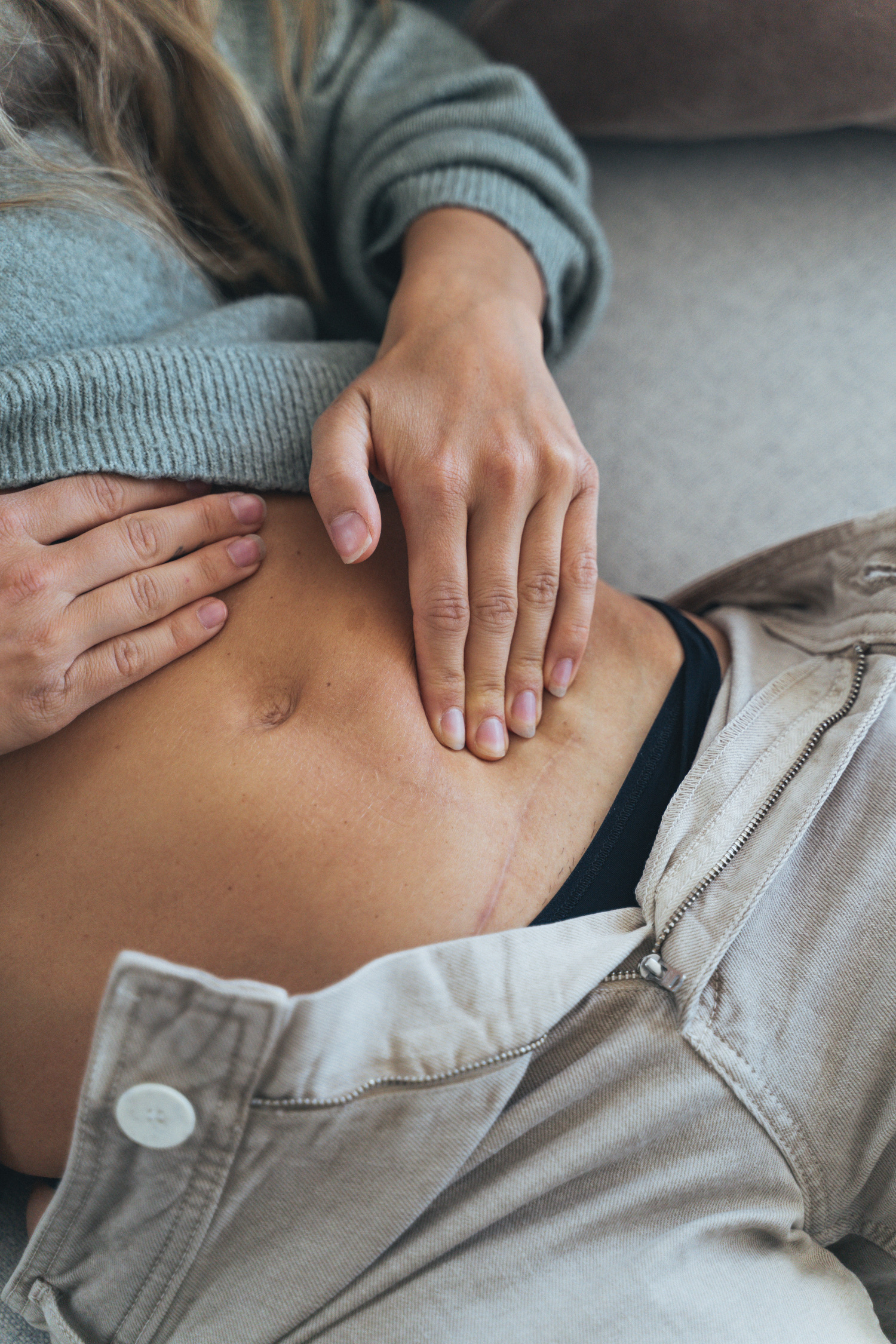
Contrary to what many believe, your abdominal muscles does not get cut during a caesarean section. Instead, the connective tissue between the abdominal muscles is pulled apart! Those who have had a caesarean section are no more likely to have remaining muscle separations than those who have given birth vaginally.
After a caesarean section, we need to take into account the healing process that takes place (after what is a major abdominal surgery) and the restrictions that are in place for the first 8 weeks.
Research shows that abdominal muscle strength itself may be slightly lower initially (6 months postpartum) after a caesarean section, but after a year there is no difference compared to vaginal delivery. However, it is common for everyone to be weaker in the abdomen one year after pregnancy than before - regardless of how you gave birth.
How to Exercise Your Core After Pregnancy?
Many people feel uncertain about how they can, and should, exercise their stomach after pregnancy. To clear up all the uncertainties, we physiotherapists at Mammaträning have created Core program in different steps - so that you can safely both recover and get stronger.

Article written by
Carolina Jozic
Physiotherapist
⚡️ Download Mammaträning
- Exercise programs created by physiotherapists for the different levels of the pregnant and postpartum journey
- 2000+ workouts at your level, with the tools you have at home
- 120 articles about the body, exercise and running during and after pregnancy

3 Tips After a Caesarean Section
C-section is a phenomenal way to give birth, but also a major abdominal operation
Diastasis Recti After Pregnancy
Not sure if you have split abs after giving birth? Here's how

How Your Body Changes During Pregnancy
During pregnancy, an active hormone called relaxin is found in