
ARTICLE > PELVIC FLOOR
Pelvic Floor During Pregnancy
During pregnancy, the pelvic floor is under increased stress, which can cause symptoms such as heaviness and urine leakage. Here's what's actually happening, why pelvic floor training can help - and why it's not the whole answer.
⚡️ Article in brief
- The pelvic floor is under more strain than usual during pregnancy, as the uterus and baby weigh down
- Kegels are good - but don't forget relaxation
- There is no link between pelvic floor training and fewer vaginal tears

How the Pelvic Floor is Affected During Pregnancy
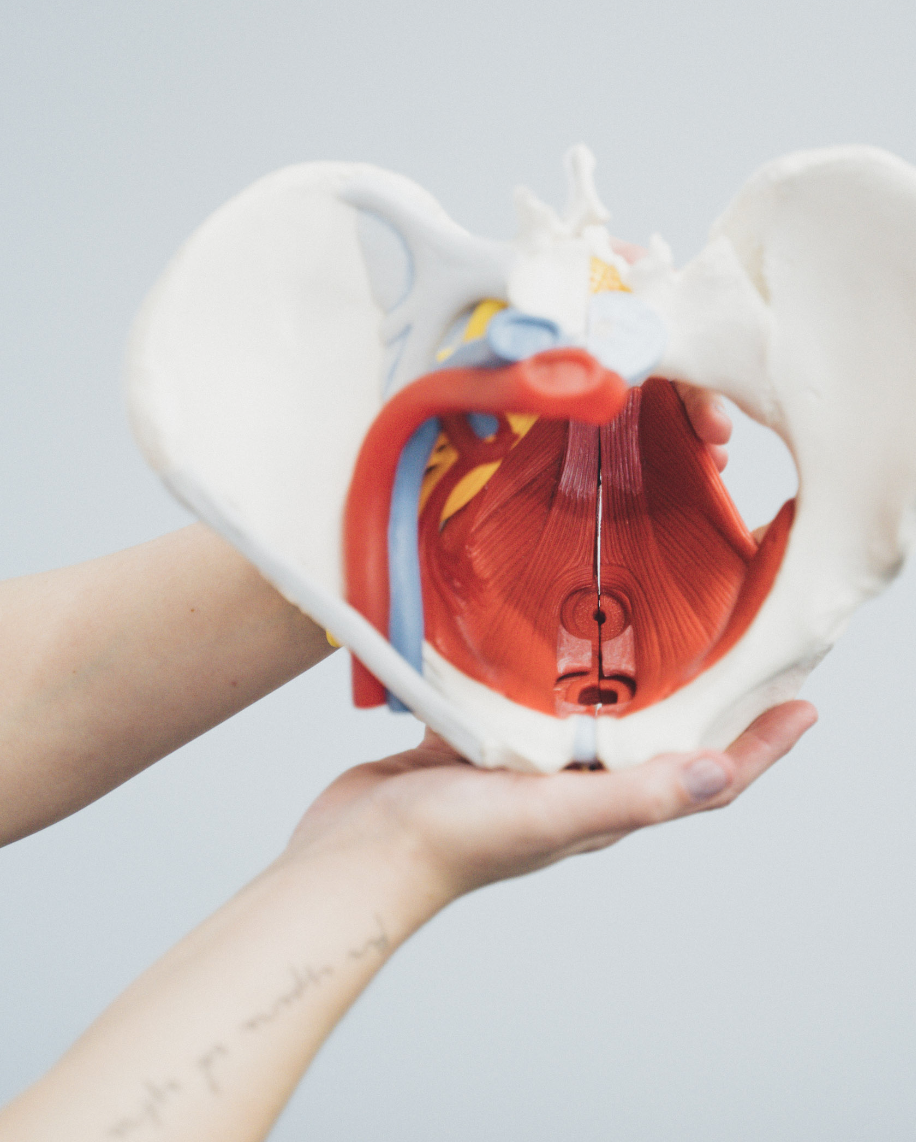
The pelvic floor is a group of muscles at the bottom of the pelvis that act as a supportive floor for the organs. The muscles also affect continence (ability to hold urine/gas/feces) and sexual function.
During pregnancy, it takes on a new job - supporting a growing uterus and baby. It can feel heavy or contribute to urine leakage, especially during coughing, sneezing or physical exertion. This is where pelvic floor training plays an important role!
Kegels - How to Do it
Strengthening the pelvic floor (often referred to as pelvic floor/kegel training) can reduce the risk of urine leakage both during and after pregnancy. It's not about squeezing constantly, but rather about getting your muscles strong enough to work when you need them to - and relax when you don't.
Here's how to do a kegel:
Lie down (or sit comfortably)
Start with a light squeeze from behind, as if you were holding in a fart
Keep squeezing forward around the vagina and urethra
Imagine you are going to pull something up inside - like a tampon
Breathe calmly at all times
Does it feel difficult? Try placing a finger in the vagina to feel that it both tightens and lifts upwards/forwards. You don't need to practice for long - 10 kegels about 1-3 times a day are enough.
Don't Forget to Relax!
The pelvic floor likes variety. It wants to be activated - but also to rest. That's why it's equally important to practice relaxation, especially before childbirth. A tense pelvic floor that never rests is not stronger, just more tired.
And don't forget your tummy! During pregnancy, the bowels move more slowly, increasing the risk of constipation. This puts even more downward pressure and can make both leakage and discomfort worse. Keep your tummy soft with fiber, fluids, movement and toilet habits that work.
💖 Lecture on the Pelvic Floor
In the app Mammaträning , physiotherapist Carolina Jozic gives a lecture on everything you need to know about the pelvic floor during pregnancy!

Prevent Tears by Doing Kegels?
No - and this is important to mention! A vaginal tear during delivery is not a result of "not doing enough kegels". It's affected by things you can't control, like the baby's size, head circumference and the way the birth itself happens.
Doing kegels doesn't prevent vaginal tears, but it can help you recover better afterwards.
So keep doing your kegels, but remember to let your pelvic floor relax too!

Article written by
Carolina Jozic
Physiotherapist
⚡️ Download Mammaträning
- Exercise programs created by physiotherapists for the different levels of the pregnancy and postpartum journey
- 2000+ workouts at your level, with the equipment you have at home
- 120 articles about the body, exercise and running during and after pregnancy
How Your Body Changes During Pregnancy
During pregnancy, an active hormone called relaxin is found in
Pelvic Floor During Pregnancy
During pregnancy, the pelvic floor is exposed to increased stress, which can cause
5 Training Tips for Pelvic Pain
Pelvic pain affects about 70% of all pregnant women, but you