
S T E P 1
New Mama
New Mama
● Everything you need to optimize your recovery
● Different programs for cesarean and vaginal delivery
● 8 weeks of video coaching by a physical therapist
● A safe start after childbirth
DIFFERENT PROGRAMS DEPENDING ON HOW YOU GAVE BIRTH
Step-By-Step Recovery Plan
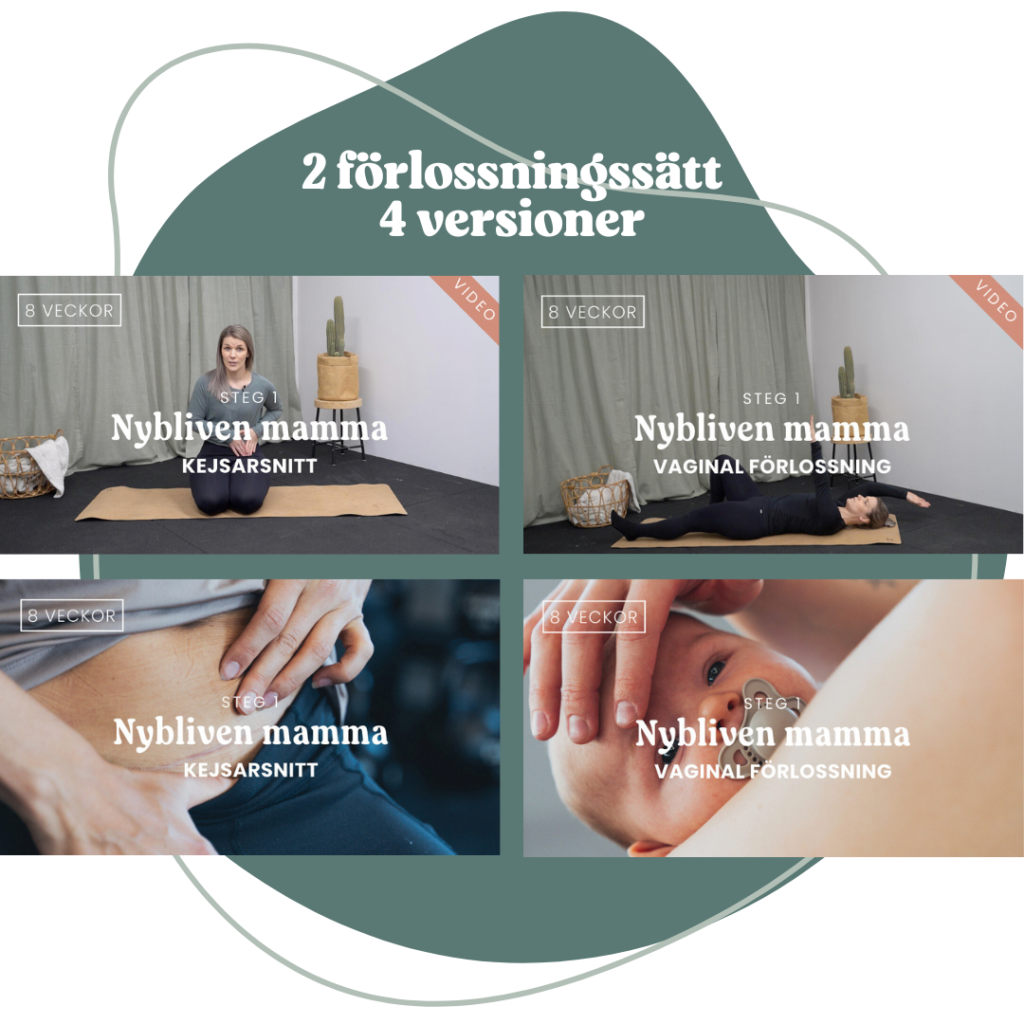
Different methods of childbirth require different care. That's why it made sense for us to create two separate programs - depending on whether you gave birth vaginally or by caesarean section!
Both programs can be started immediately after birth and offer gentle recovery for those first few weeks. In the C-section program, our physiotherapists have paid special attention to your healing needs after surgery, so you are in safe hands.
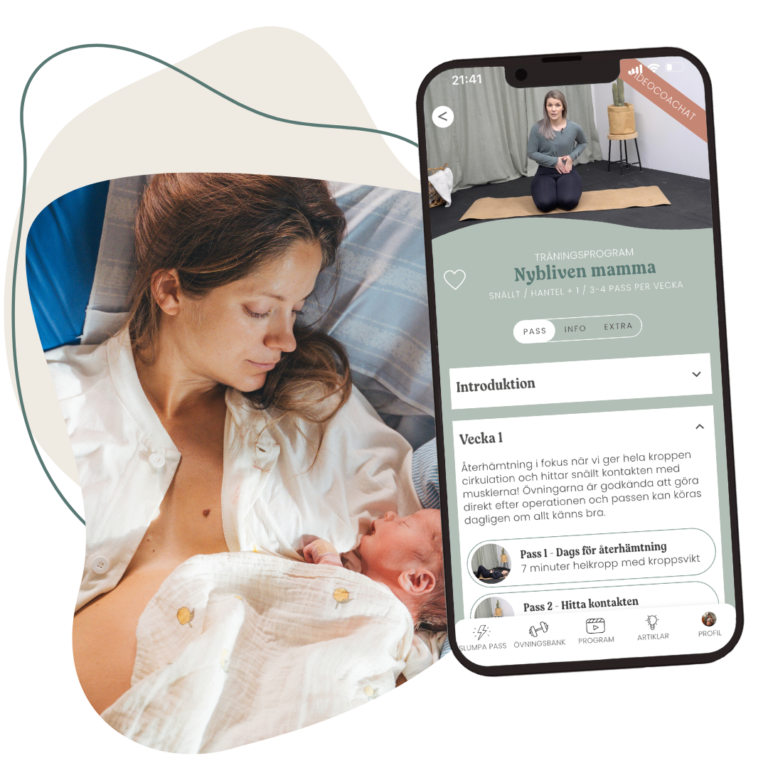
The Program in Brief:
- 3-4 short sessions per week for 8 weeks
- Gentle recovery plan after birth
- Two versions: caesarean section or vaginal delivery
- Guided sessions by physiotherapist Carolina
- Body weight only for the first four weeks, then a thin long band and light dumbbell
Who is it for?
New Mama (Step 1) is perfect if you have recently given birth and want to reconnect with your pelvic floor and abdominal muscles. Here we take into account everything from sore genitals to Diastasis Recti, painful pelvic joints and healing incisions.
In the video-coached program, Carolina guides you through pelvic floor and breathing exercises, and describes how movements should be performed and felt. A caring physiotherapist in your phone!
Questions About Exercising After Childbirth
Here you'll find questions and answers about exercising as a new mom, answered by physical therapist Carolina Jozic.
How should I exercise when pregnant?
There are no exercises you should avoid simply because you’re pregnant or have reached a certain week or trimester. Instead, exercising during pregnancy is about adapting to how your body feels, your energy level on any given day, and what you’re capable of. Your workout shouldn’t cause pain or discomfort. Does it feel good? Then that’s usually a good sign.
During pregnancy, it’s a good idea to focus a little extra on strength training. Your body changes, your center of gravity shifts, and your muscles, joints, and pelvic floor have to work in new ways.
If you exercised before your pregnancy, you can usually continue as usual, as long as you don’t have any complications or experience pain. Want to start exercising during your pregnancy? Start gently and build up your strength gradually. If you’re used to more intense workouts, our more challenging “Pregnancy Deluxe” program might be right for you.
The Pregnancy Program was developed by our physical therapists and includes exercises designed for the pregnant body, taking into account your growing belly, the strain on your pelvic floor, and joint pain. In the video-guided version, you’ll get extra help adapting the exercises to how you’re feeling each day.
P.S.: The WHO recommends that pregnant women get at least 150 minutes of moderate-intensity physical activity per week, plus muscle-strengthening exercises twice a week.
Why should you exercise while pregnant?
Exercising exercising while pregnant has many benefits for both you and your baby! Exercising during pregnancy reduces the risk of pregnancy complications, can improve your blood values, reduces fatigue, boosts mental well-being, and can even reduce pain. Plus, exercise helps your pregnant body handle the physical demands that come with pregnancy.
What exercises should you avoid while pregnant?
There are no exercises that are off-limits just because you’re pregnant or have reached a certain stage of pregnancy. This is a persistent myth! Instead, switch up or adapt your exercises if they no longer feel comfortable or controlled. Help with modification options for all exercises can be found in the Mammaträning exercise bank!
When you're pregnant, there are only three things you should avoid when exercising: exercising at high altitudes (above 2,500 meters), scuba diving, and sports where you risk getting hit in the stomach. Other than that, it's fine to continue with—and even start—almost any kind of exercise!
Some recommendations suggest that you should avoid exercises done while lying on your back starting in the 16th week of pregnancy due to vena cava syndrome: a condition that can cause nausea and dizziness when lying on your back while pregnant. However, vena cava syndrome does not affect all pregnant women, and many pregnant women will be able to exercise while lying on their backs without experiencing any symptoms.
Is it okay to do abdominal exercises during pregnancy?
Yes, you can! To exercise your abs while pregnant doesn’t have to be any more complicated than when you’re not pregnant. You’ll notice that you might find it harder to control certain exercises, which usually shows up as a “bulge” in your stomach, where it takes on a slightly pyramid-like shape. Take that as a sign that it’s time to scale back the exercise to an easier version. But any abdominal workout during pregnancy that feels good and is controlled is good!
Caesarean Section
Carefully selected exercises that are approved during the restriction period (first 8 weeks) help the body to recover after surgery.
Initially, the focus is on healing and recovery, and then on rebuilding strength and function throughout the body - which our physiotherapists are experts in.
Vaginal Delivery
Without leaving home, you'll get first-class help from our physiotherapist to reconnect with your pelvic floor and core. You'll also strengthen your whole body step-by-step in a pelvic floor-friendly way, making it ready for more strain later on.
Choose Your Membership
Start a subscription to access all content in the app.


